The Trap: Testing Without Reviewing
A full SHSAT-style practice test takes time and energy. If a student finishes a test and immediately starts another one without reviewing, the family may collect scores without building skill.
A better summer pattern is diagnostic, review, focused practice, then timed check. The review step is what turns a test into preparation.
Use One Diagnostic First
The first practice test should answer a simple question: where are the weak spots? It should include enough ELA and math to reveal patterns in reading evidence, revising and editing, algebra, ratios, geometry, word problems, grid-ins, pacing, and stamina.
After that first diagnostic, do not rush into another full test. Spend several days practicing the top weak spots.
When to Add Another Timed Test
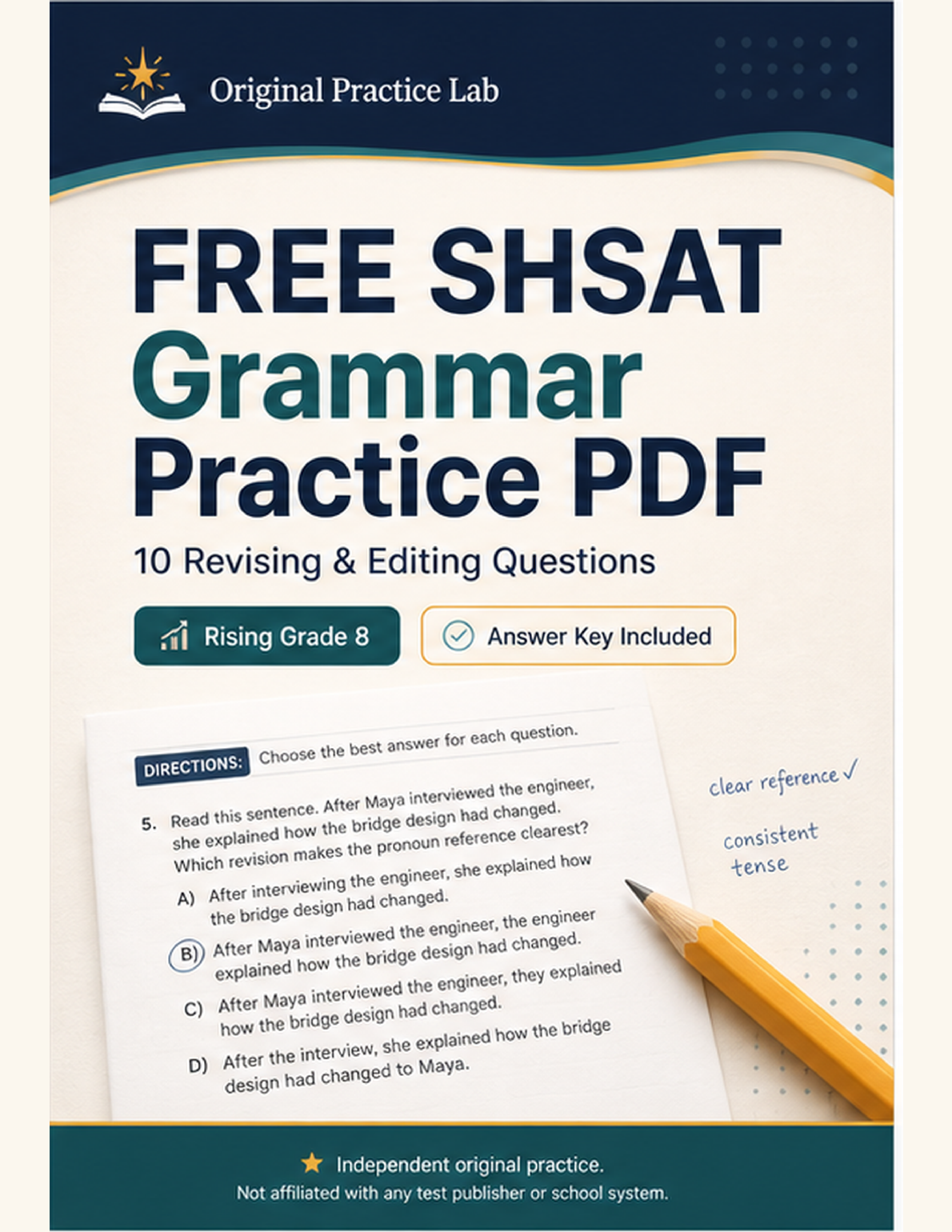
Add another timed check after the student has practiced something specific. If the weak spot was grammar, give revising and editing practice first. If the weak spot was word-problem setup, practice translation before retesting.
The next timed test should check whether the practice changed behavior, not simply produce another number.
A Practical Summer Rhythm
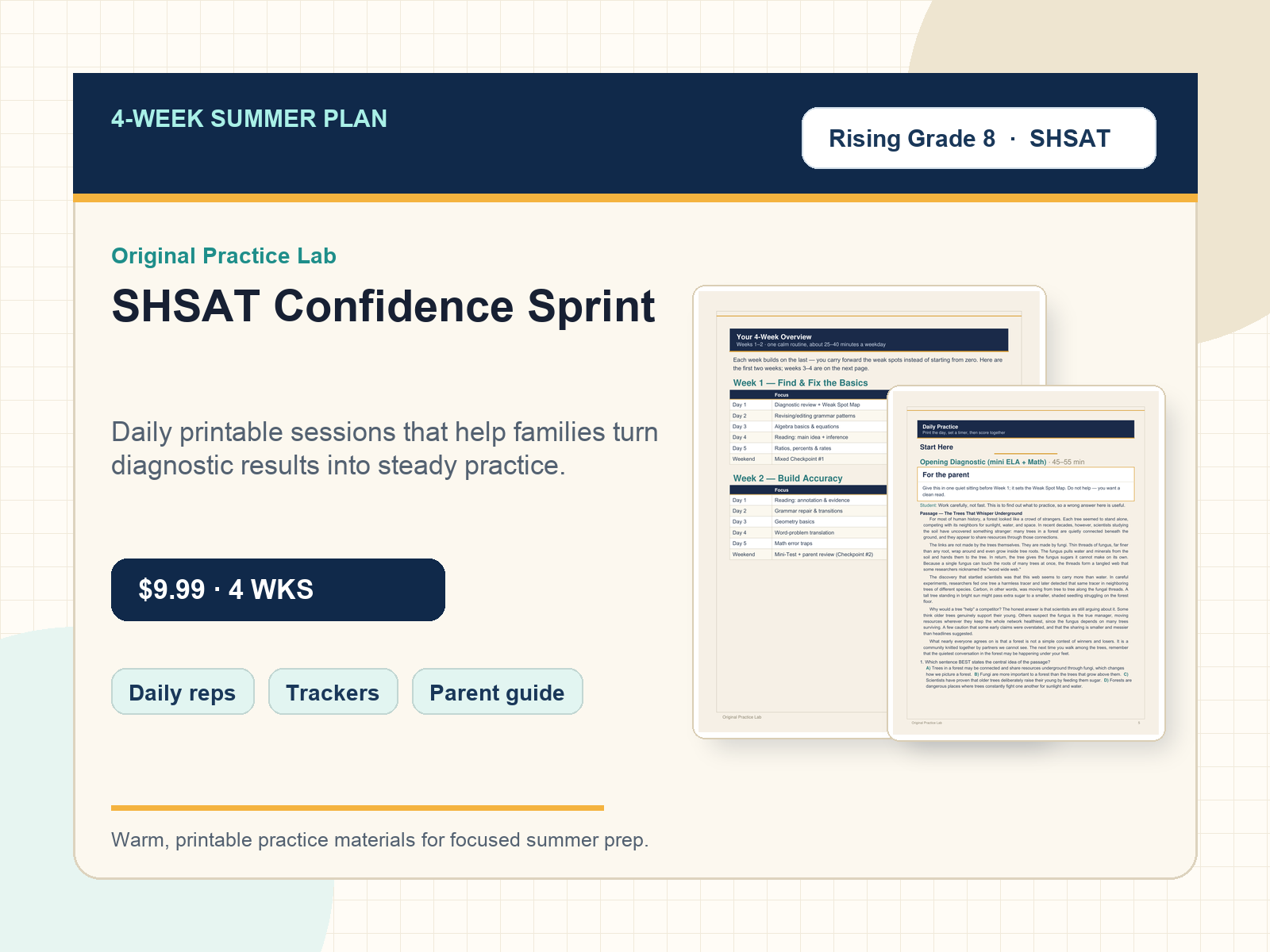
Week 1 can start with a diagnostic and weak-spot map. Week 2 can focus on the biggest basics. Week 3 can add mixed timed sets. Week 4 can review recurring errors and rebuild confidence.
That rhythm usually teaches more than repeated full tests with shallow review.
The Parent Decision
Use the $1.99 diagnostic if you need a baseline. Use the free tracker if you already have a test result. Use the 4-week sprint if the family needs a day-by-day plan and does not want to choose random worksheets.