Quick Answer for Parents
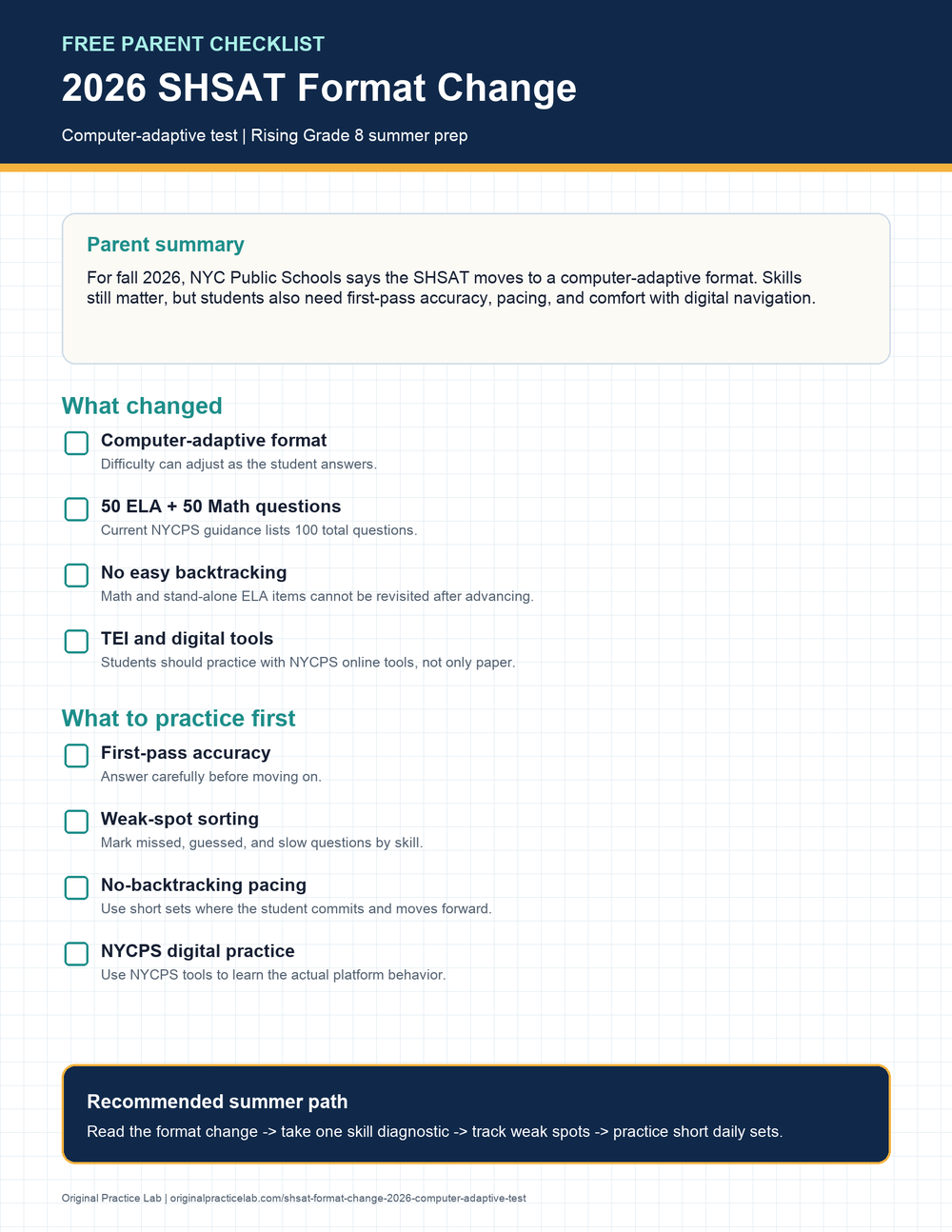
Beginning with the fall 2026 administration, NYC Public Schools says the SHSAT will move to a computer-adaptive format. Students will still be tested on SHSAT ELA and math skills, but the testing experience changes in ways that matter for practice.
The practical parent takeaway is this: your child should still build reading, revising/editing, algebra, ratios, geometry, word-problem, and grid-in skill. But summer prep should also train first-pass accuracy, pacing without easy backtracking, and comfort with digital test tools.
What Changed for Fall 2026
The NYCPS SHSAT page currently describes two sections: English Language Arts and Mathematics, with 50 questions in each section and standard testing time of 180 minutes.
Both sections may include multiple-choice, fill-in-the-blank, and technology-enhanced items. ELA includes revising/editing and reading comprehension; math includes ratios, number systems and expressions, equations and inequalities, statistics and probability, and geometry.
The biggest behavior change is navigation. Students must respond before moving forward. For passage-based ELA sets, they can review within the set before submitting it. For math and stand-alone ELA items, they cannot return after advancing.
Why Computer-Adaptive Matters
A computer-adaptive test adjusts item difficulty as the student answers. That does not mean families should chase mystery tricks. It means the child needs steadier accuracy across the core skills, because careless early answers and pacing problems can feel more costly when the test is moving forward one item at a time.
Old paper-style practice still has value for skill review. It can show whether a student is missing reading evidence, transition logic, ratios, percent change, geometry assumptions, work-rate setup, or grid-in formatting. But paper practice should not be marketed as a full simulation of the 2026 adaptive platform.
The best summer strategy is to combine both: use printable practice to find weak spots, then use NYCPS online tools and adaptive-aware habits to practice the actual digital testing behavior.
What Rising Grade 8 Students Should Practice This Summer
First, take one clean skill diagnostic. Do not overread the score. Mark missed, guessed, and slow questions, then sort them into ELA and math weak-spot categories.
Second, practice no-backtracking behavior in short sets. The student should answer, commit, and move forward rather than treating every question as something they can revisit later.
Third, use NYCPS online resources to understand the platform tools: highlighting, eliminating answers, note-taking, line-reader style supports, and passage-set navigation.
Fourth, turn the weak spots into a weekly plan. If revising/editing is weak, do grammar and sentence-clarity drills. If math setup is weak, practice translating word problems before calculating. If mistakes are scattered, use a fuller 4-week plan.
How Original Practice Lab Fits
Original Practice Lab materials are independent practice resources, not NYCPS SHSAT simulations. The $1.99 diagnostic is best used as a summer skill baseline: find where the child is weak before families spend more time or money.
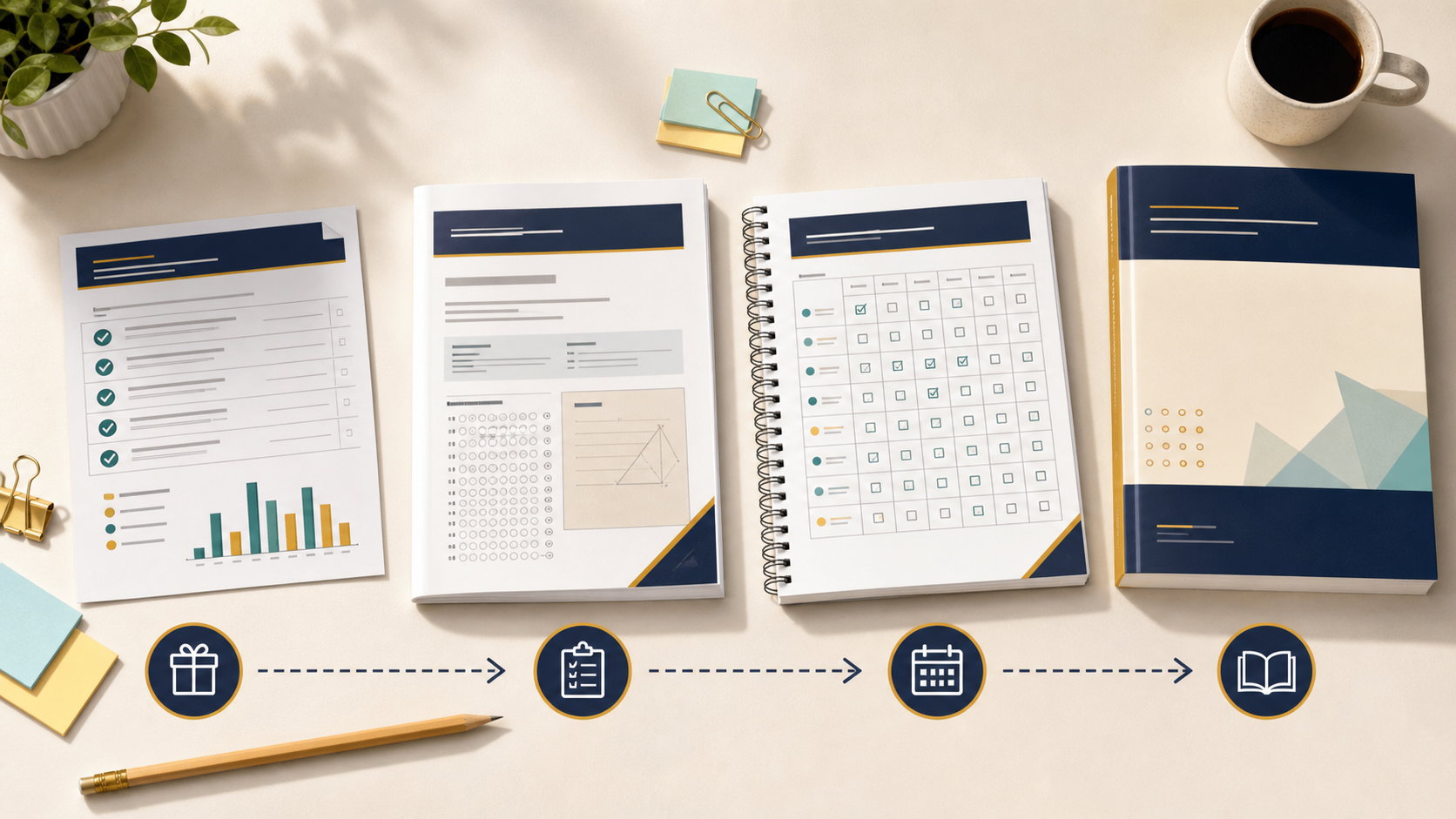
The 4-week sprint is best used after the baseline. It turns weak spots into short daily ELA and math practice so the student can build steadier accuracy before fall.
For the 2026 format, pair those printables with NYCPS digital practice. Printables help you see the skill pattern; digital tools help your child learn the testing environment.
NYCPS Sources Parents Should Check
Format details can change. Before test day, families should confirm the current rules on NYC Public Schools pages.