Why This Mistake Matters
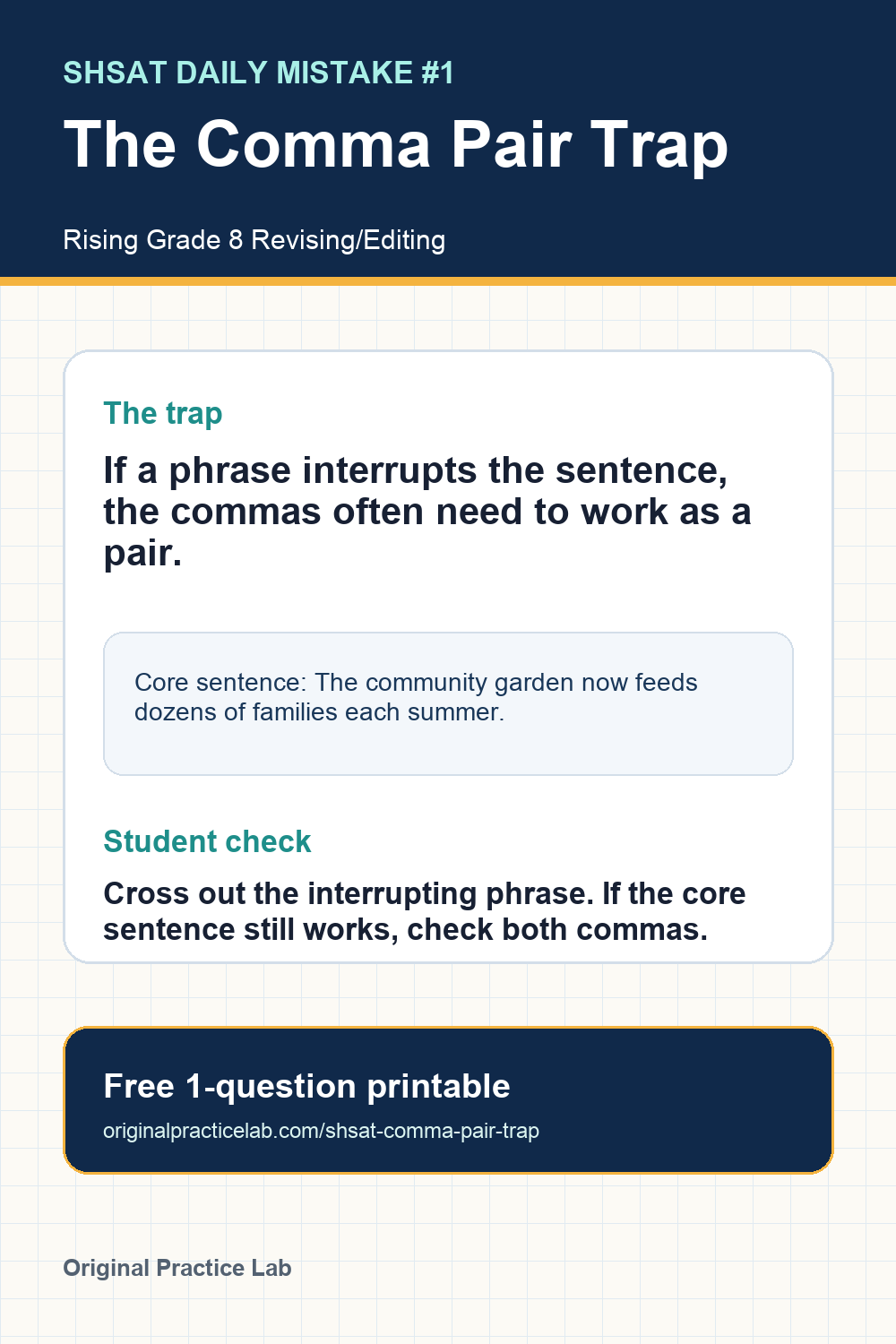
Students often learn that commas create pauses, but revising/editing questions usually care about structure, not sound. If a phrase interrupts the middle of a sentence, the sentence often needs a matching pair of commas.
The trap is that one answer removes only the opening comma or only the closing comma. The sentence may still sound almost normal, but the punctuation no longer matches the structure.
The Student Move
Teach the student to cross out the interrupting phrase and read the core sentence. If the core sentence still works, then the extra phrase usually needs matching punctuation on both sides.
For this mini-lesson, the core sentence is: The community garden now feeds dozens of families each summer. The phrase in the middle adds extra information, so the commas need to work as a pair.
One-Question Practice
Question: Which revision correctly punctuates the sentence? The community garden, which opened three years ago now feeds dozens of families each summer.
Correct answer: The community garden, which opened three years ago, now feeds dozens of families each summer.
Why: which opened three years ago is extra information inserted into the sentence. The phrase needs a comma before it and a comma after it.
What to Watch For Next
If your child misses this kind of item, do not assign a giant grammar worksheet immediately. Give several short revising/editing questions that force the same decision: what is the core sentence, and what information interrupts it?
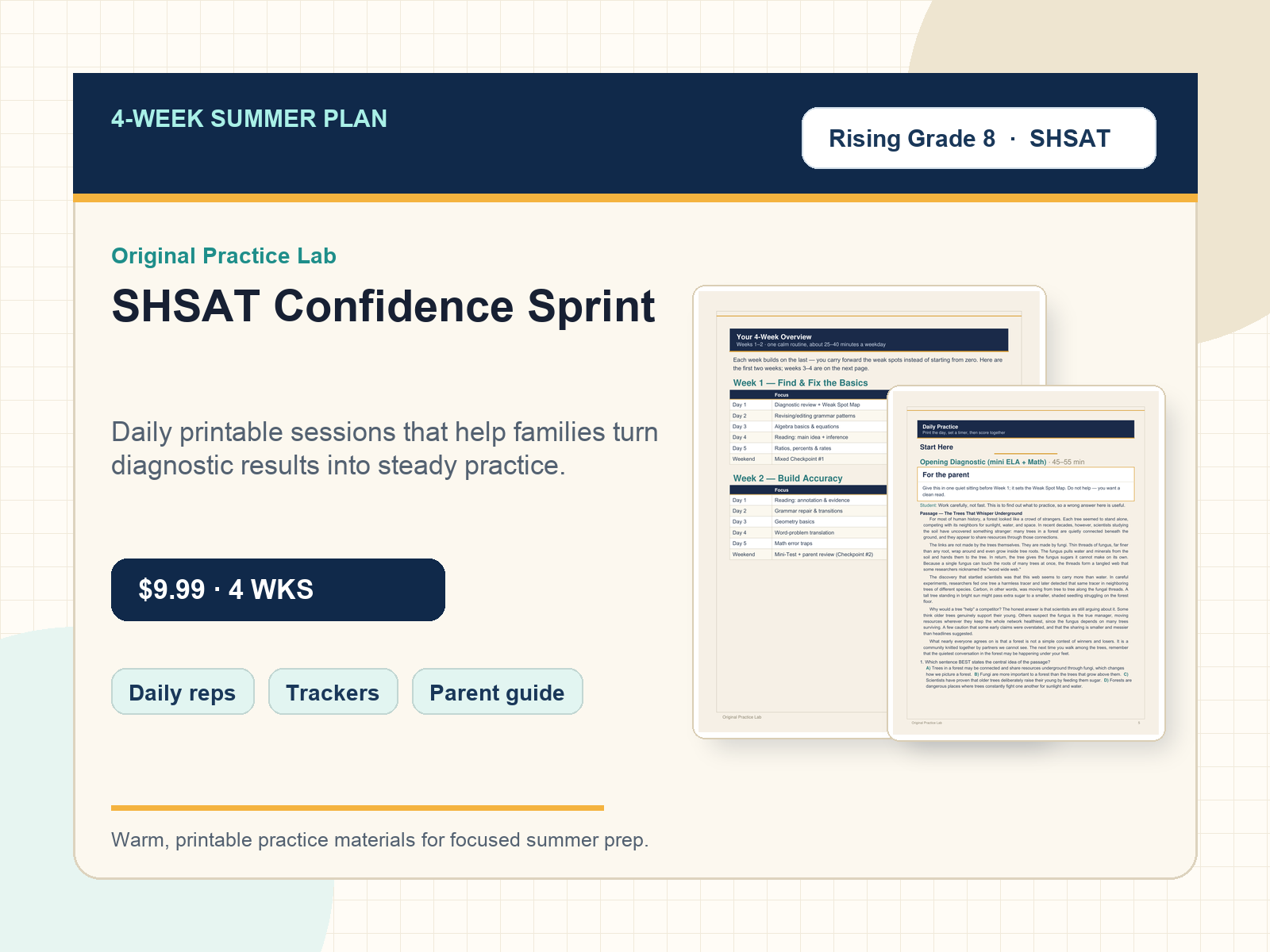
If the student also misses transitions, sentence combining, or unclear pronoun questions, use the free grammar sample next. If the weak spot is unclear, use the $1.99 diagnostic to map both ELA and math before choosing the next practice block.