Daily SHSAT mistake lab
SHSAT Daily Mistake #4: The Sentence-Combining Trap
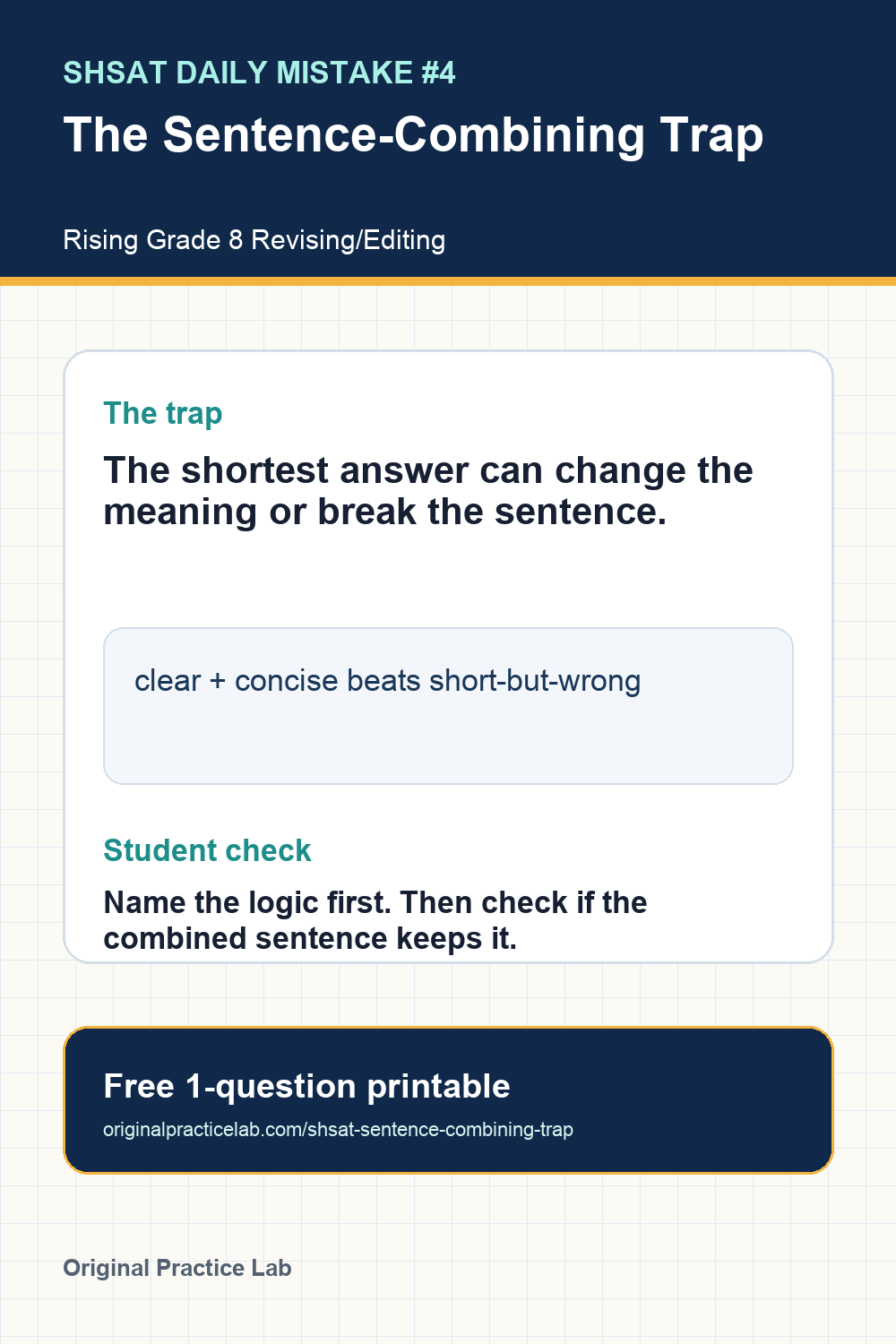
The shortest answer is not always the clearest answer. Strong revising/editing choices keep the meaning, logic, and grammar intact.
Free printable mini-lesson
Daily Mistake #4: The Sentence-Combining Trap
Print one SHSAT-style revising/editing question, let your child compare meaning, then review why the shortest answer can fail.
- One focused sentence-combining question
- Answer key with a parent-friendly explanation
- Next-step links to the free grammar sample and diagnostic
Download printable PDF
Why This Mistake Matters
Students are often told to make writing concise. That is useful, but revising/editing questions do not reward shortness by itself.
The trap is that a short combined sentence may drop a cause, change who did the action, or create a grammar problem. The best answer is clear and concise, not merely short.
The Student Move
Before choosing an answer, have the student say what relationship must stay in the sentence: cause, contrast, time order, example, or description.
Then check each answer for two things: did it keep the original meaning, and is the sentence grammatically clean?
One-Question Practice
Question: Which revision combines the sentences most clearly without changing the meaning? The robotics team redesigned the wheel mounts. The new mounts reduced friction. The robot turned more smoothly during the final trial.
Correct answer: The robot turned more smoothly during the final trial after the robotics team redesigned the wheel mounts to reduce friction.
Why: this answer keeps the cause-and-result relationship clear. Some shorter choices create a comma splice, make the wheel mounts seem to redesign something, or leave out why the robot improved.
What to Watch For Next
If your child misses this kind of item, ask them to explain what changed from the original sentences. A wrong answer often sounds smooth but quietly changes the logic.
If sentence combining is hard along with transitions, pronouns, or punctuation, use the free grammar sample next. If the weak spot is unclear, use the $1.99 diagnostic to map both ELA and math before choosing the next practice block.
Recommended next step
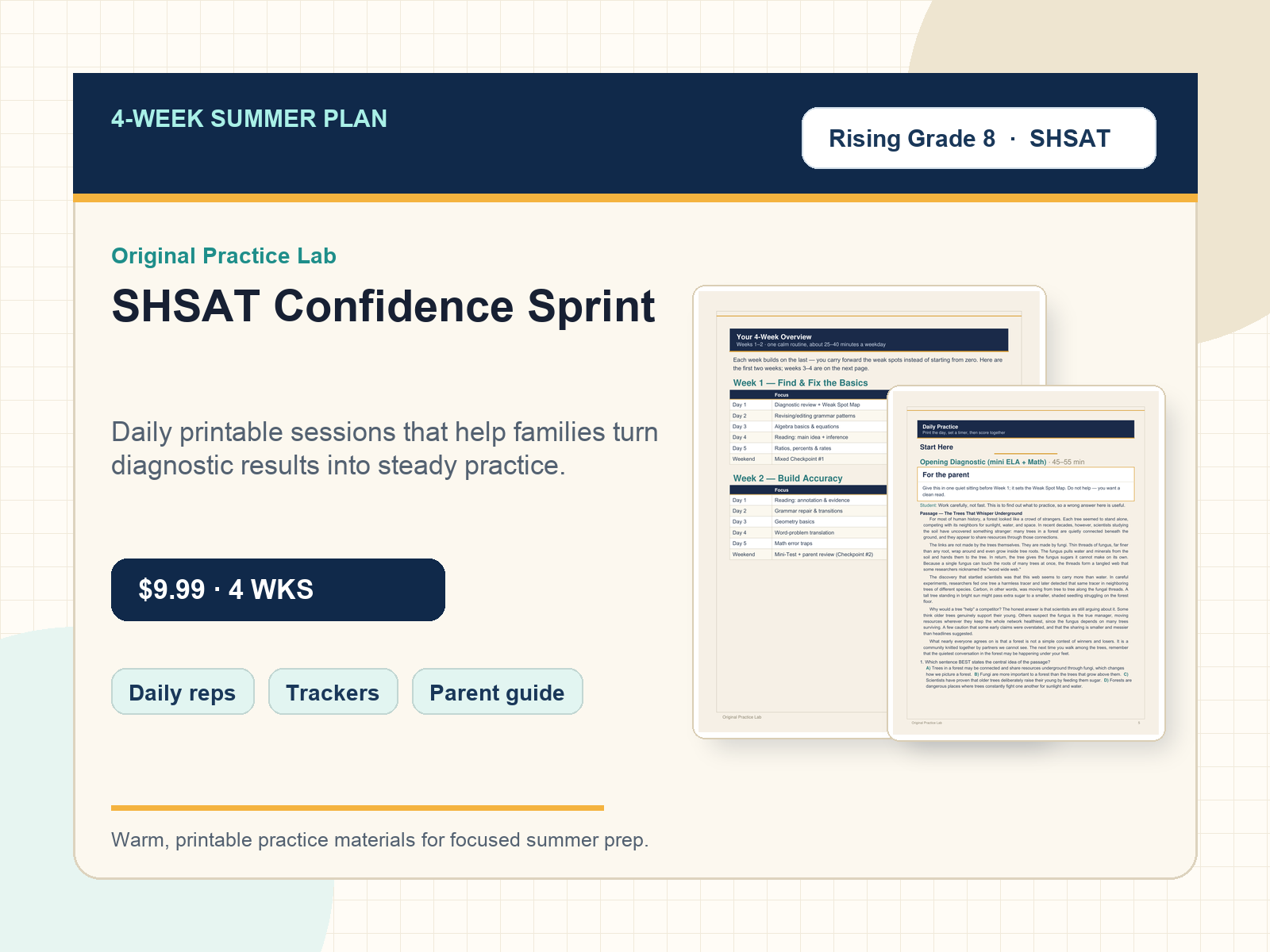
Use the Diagnostic First, Then Build a 4-Week Plan
For most families, the cleanest summer path is one printable diagnostic, followed by short daily ELA and math practice where the child actually needs it.
Questions Parents Ask
What is the sentence-combining trap?
It is the mistake of choosing a short combined sentence that changes the meaning, creates a grammar problem, or hides the logic between ideas.
How should a rising Grade 8 student check this?
Name the relationship first, then check whether each answer keeps that relationship and reads as a complete, grammatical sentence.
What should parents do after this mini-lesson?
Use a few focused revising/editing questions. If the student keeps choosing answers that sound smooth but change meaning, use the free grammar sample or the $1.99 diagnostic.
Is this affiliated with SHSAT, NYC schools, or any test publisher?
No. Original Practice Lab creates independent practice materials with original questions. The materials are not affiliated with, endorsed by, or sponsored by any test publisher, school district, or testing organization.