The Better Question Is Not Just the Score
Parents often want to know whether a summer SHSAT diagnostic score is good. The honest answer is that one early score is not enough to judge readiness. A useful diagnostic should show which skills need attention before fall prep becomes busier.
The most important information is the pattern: ELA evidence, revising and editing, passage stamina, algebra, ratios, geometry, word-problem setup, grid-ins, pacing, or careless errors.
Separate Raw Performance From Practice Direction
A high summer score can hide unstable skills if the student guessed correctly or ran out of time late. A lower summer score can still be useful if it reveals exactly what to fix.
After the diagnostic, mark missed, guessed, and slow questions. Guessed-correct questions matter because they may not survive a harder timed sitting.
What Parents Should Look For
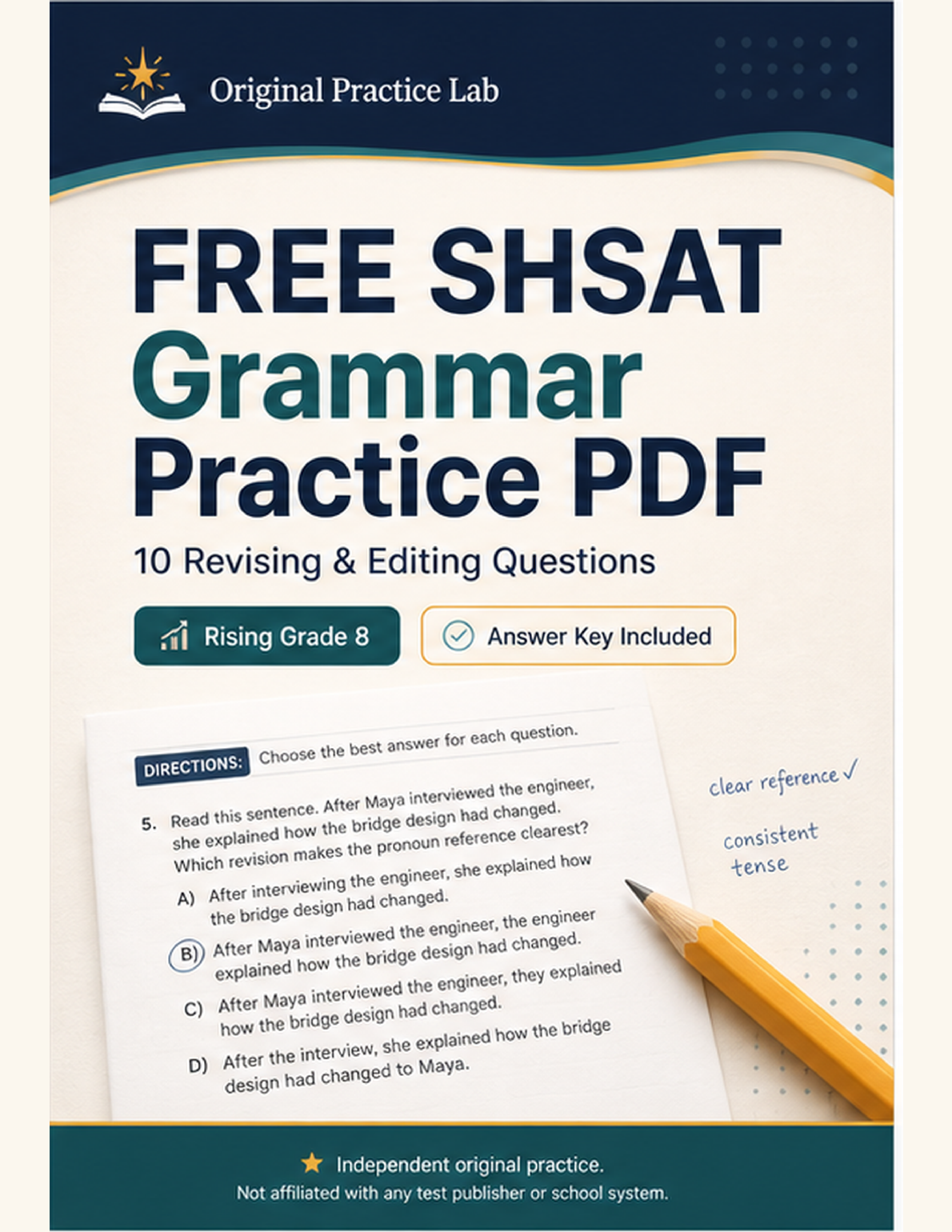
Look for clusters. If many ELA misses are revising and editing questions, start with grammar and clarity practice. If math misses cluster around word problems, practice translation and setup before assigning more mixed math.
If misses are scattered across many categories, a structured plan is more useful than another random worksheet. That is where a 4-week sprint can help.
A Simple Review Rule
Do not decide the whole summer from one number. Decide the next week from the mistake pattern.
A good next week might target one ELA skill and one math skill. Keep the plan narrow enough that the student can finish, score, and review the work.
What to Use Next
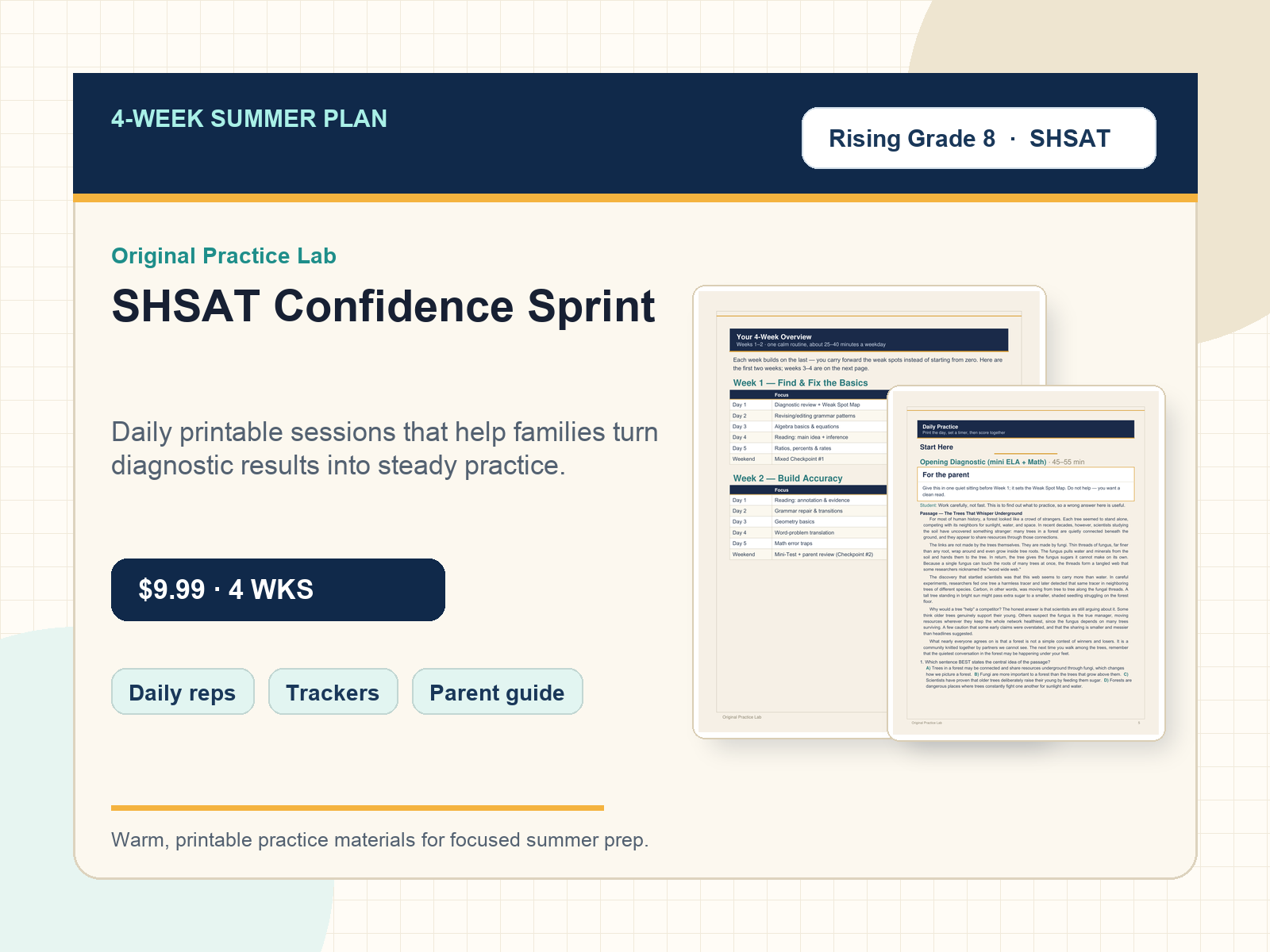
If your child has not taken a baseline yet, start with the $1.99 diagnostic. If your child already took a practice test, use the free weak-spot tracker to sort the result. If the weak spots are broad, use the 4-week Summer SHSAT Confidence Sprint.
The goal is not to chase a perfect summer score. The goal is to enter fall knowing what your child needs to practice most.